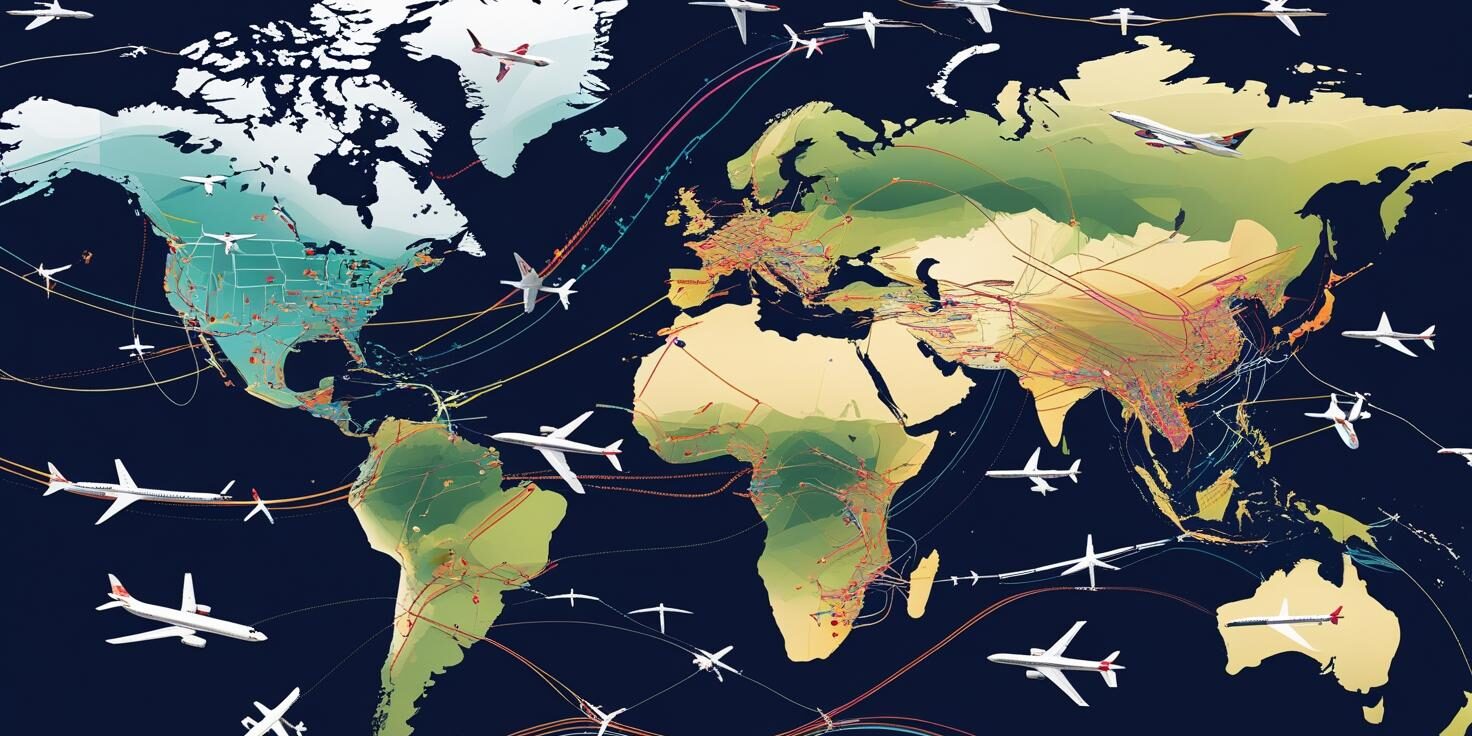
Air travel connects millions of passengers and cargo flights across continents. Behind the scenes, a complicated network makes sure that every plane takes off, flies, and lands safely. This system is known as Global Air Traffic Management (ATM). For government aviation authorities, airlines, defense organizations, and private aviation companies, understanding the fundamentals of ATM is critical to improving operational efficiency, safety, and compliance.
But what exactly is global air traffic management, and why is it the backbone of modern aviation? Let’s break it down.
What is Global Air Traffic Management (ATM)?
Global Air Traffic Management (ATM) is the coordinated process of managing aircraft in the air and on the ground to ensure safe, efficient, and environmentally sustainable flight operations. It integrates a combination of technologies, regulations, and human expertise to manage the flow of air traffic worldwide.
The International Civil Aviation Organization (ICAO) defines ATM as the collaborative system that includes:
- Air Traffic Control (ATC) – Directing aircraft safely in controlled airspace.
- Airspace Management – Allocating airspace for civil, military, and emergency flights.
- Air Traffic Flow Management (ATFM) – Regulating air traffic to prevent congestion and delays.
Example: Think of global ATM as a massive, real-time chess game. Every aircraft represents a moving piece, and air traffic controllers ensure no two pieces collide while optimizing each move to save time and fuel.
The Global Air Traffic Management Market: Growing Demand and Innovation
The global air traffic management market is expanding rapidly due to increasing passenger demand, the rise of unmanned aerial vehicles (UAVs), and the need for next-gen air traffic control automation systems.
Market Growth Factors
- Rising Air Traffic Volumes
According to ICAO, global air travel is expected to double by 2040, pushing the need for smarter air traffic management automation systems. - Technological Advancements
The transition from traditional radar to satellite-based surveillance and AI-driven ATM software is reshaping airspace operations. - Military and Defense Needs
The traffic management air force systems require advanced capabilities for joint operations, ensuring both civilian and military aircraft operate seamlessly in shared skies. - Environmental Pressures
Efficient air traffic control automation systems help reduce unnecessary fuel burn, cutting CO₂ emissions and supporting sustainability goals.
Case in Point:
In 2023, Europe’s Single European Sky ATM Research (SESAR) project deployed advanced trajectory management tools that improved airspace capacity by 12% and reduced fuel consumption for airlines.
Key Components of Global Air Traffic Management
To understand global ATM operations, it’s essential to know its core components:
1. Air Traffic Control (ATC)
ATC ensures every aircraft maintains safe separation from others. Modern new air traffic control systems are integrated with:
- Primary and Secondary Radar
- Automatic Dependent Surveillance-Broadcast (ADS-B)
- Voice and Digital Communication Systems
2. Air Traffic Management Automation Systems
Automation is the heart of the future of aviation. An air traffic management automation system leverages AI, big data, and predictive analytics to:
- Detect and prevent potential conflicts in flight paths.
- Optimize aircraft routing and sequencing at busy airports.
- Enable real-time collaboration between airports, airlines, and military operations.
Example:
Aireon’s satellite-based ATM software provides global coverage, allowing controllers to track aircraft even over oceans and remote areas where traditional radar is ineffective.
3. Airspace and Flow Management
Managing airspace allocation and traffic flow ensures:
- Minimal delays during peak hours.
- Efficient routing around restricted zones or weather disruptions.
- Coordination between civil and military flights for safe operations.
The Global ATM Operational Concept
ICAO developed the Global Air Traffic Management Operational Concept to harmonize air navigation services worldwide. It focuses on:
- Safety First – Reducing the risk of mid-air collisions or runway incidents.
- Efficiency – Shortening flight paths, saving fuel, and minimizing delays.
- Interoperability – Ensuring that ATM systems from different countries and regions can communicate seamlessly.
- Environmental Sustainability – Optimizing flights to reduce carbon emissions.
Example:
The U.S. NextGen ATM program and Europe’s SESAR initiative are aligned with this concept, both focusing on digitized, satellite-driven air traffic management.
The Role of Air Traffic Control Automation in Modern Aviation
Modern air traffic control automation systems are transforming the way aircraft are managed:
- Predictive Analytics: Identifies potential conflicts minutes before they occur.
- Digital Towers: Remote ATC services for smaller airports reduce operational costs.
- Integrated Military Operations: Traffic management air force solutions integrate civilian and defense airspace operations for enhanced security.
- AI and Machine Learning: Continuously optimize flight sequencing and route planning.
Real-Life Example: How Automation Solves Pain Points
Pain Point: Congestion at major hubs like Dubai International Airport (DXB) or Heathrow (LHR) can lead to 30+ minute delays.
Solution: With air traffic management software that predicts peak traffic and re-routes aircraft dynamically:
- Airlines save thousands of gallons of fuel daily.
- Passengers experience fewer delays.
- Airspace capacity is maximized without compromising safety.
Global Air Traffic Management and the Military
While commercial aviation dominates the skies, military aviation relies on traffic management air force systems for strategic operations. These systems:
- Ensure rapid response during emergencies.
- Coordinate joint exercises with civil aviation.
- Enable secure communication and radar tracking in complex missions.
Example:
During NATO exercises, integrated ATM systems allow fighter jets and commercial flights to share airspace safely without compromising national security.
The Future of Air Traffic Management: Smart, Connected, Automated
The next decade will witness AI-powered, data-driven, and globally connected ATM systems. Key trends include:
- Full Satellite-Based Surveillance: Ending reliance on ground radar.
- Integration of Drones and Urban Air Mobility (UAM): Managing flying taxis and delivery drones in urban skies.
- Predictive Climate Routing: Avoiding turbulence and storms using AI weather models.
- Cybersecurity-Driven ATM: Protecting critical aviation networks from evolving threats.
Why Global Air Traffic Management Matters to Your Organization
For airport authorities, airlines, defense forces, and aviation technology providers, adopting next-gen ATM solutions means:
- Fewer delays and optimized flight operations.
- Enhanced passenger satisfaction and cost savings.
- Compliance with international safety and environmental standards.
- Future-proof infrastructure ready for drones and autonomous aircraft.
Conclusion
As the skies become busier, global air traffic management is no longer just about safety—it’s about efficiency, innovation, and sustainability.
If you’re a government aviation authority, airline, or aerospace technology provider, investing in air traffic management software and automation systems today ensures you’re prepared for tomorrow’s connected skies.
Ready to modernize your air traffic management operations?
Contact our aviation technology experts to explore next-gen ATM solutions tailored to your operations.
People Also Ask (FAQs)
1. What is global air traffic management?
Global air traffic management is the coordinated system of controlling aircraft worldwide, ensuring safe, efficient, and environmentally friendly flight operations using automation, communication, and airspace management.
2. What is the global air traffic management market growth?
The market is growing due to rising air traffic, the integration of drones, military operations, and AI-driven air traffic management software.
3. What is an air traffic management automation system?
It is a software-driven solution that uses AI, predictive analytics, and real-time data to optimize flight paths, manage congestion, and enhance safety.
4. How does a new air traffic control system improve aviation safety?
Modern ATC systems use satellite-based tracking and automation to prevent mid-air conflicts, reduce delays, and handle higher traffic volumes efficiently.
5. Why is air traffic management important for military and defense aviation?
It ensures seamless coordination between civil and military flights, supports secure operations, and improves airspace efficiency during joint missions.