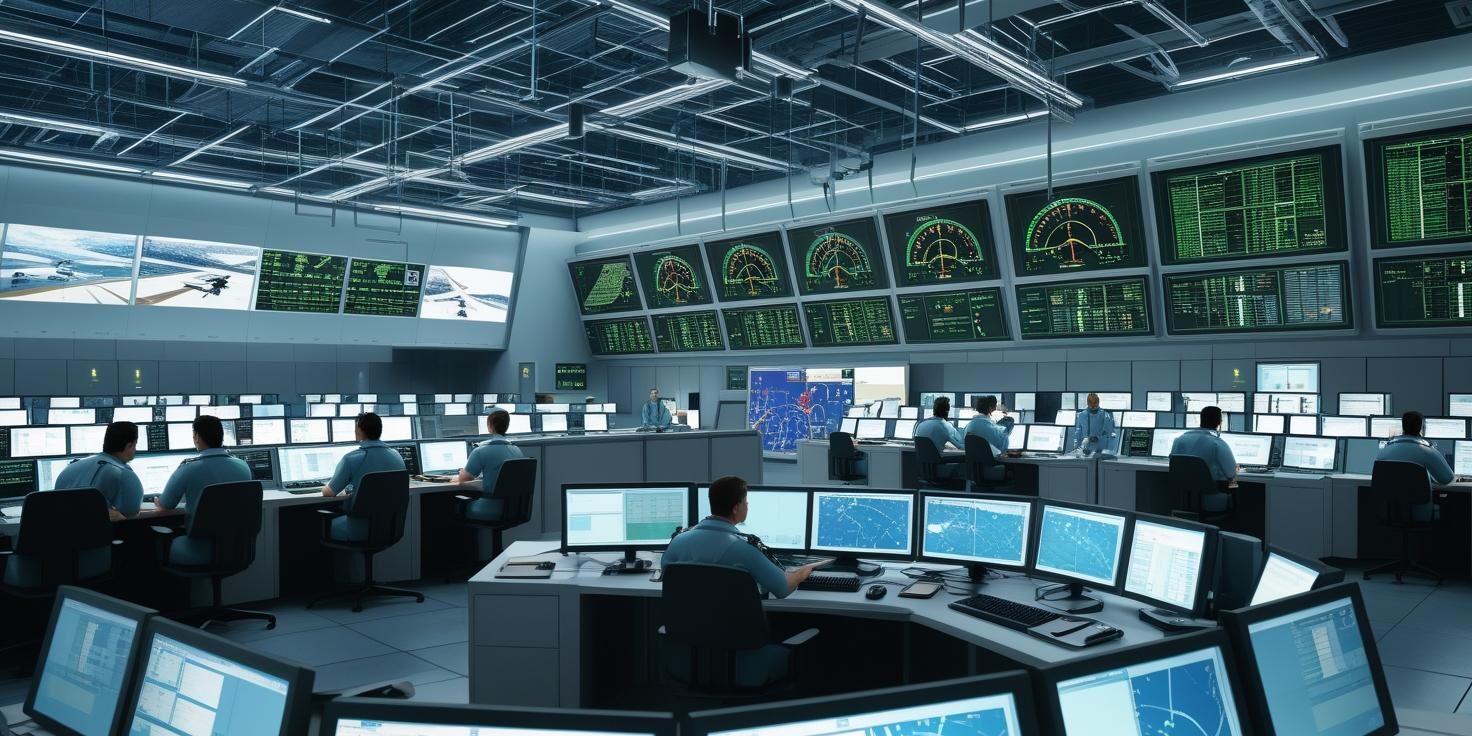
However, air traffic control is more than just a voice in the cockpit. It’s the digital brain of the sky. From aviation safety to real-time flight coordination, the ultimate goal is to keep aircraft moving safely, efficiently, and on time. With expanding skies and flights, both air traffic infrastructure and human staffing are feeling the heat.
What Makes Up an ATC System?
Let’s break it down an air navigation system is far more than radar blips and tower lights.
Communication Systems
Aeronautical communication is the heartbeat of every controller-pilot interaction. VHF radios, data links, and emergency frequencies ensure clear pilot-controller communication — because in aviation, there’s no room for guesswork.
Radar and Surveillance Equipment
Radar technology is how aircraft get tracked in real time. Primary radar detects any flying object; secondary radar identifies it and gathers data like altitude and flight number. Now, with satellite-based navigation systems, this coverage extends across oceans and remote regions.
Navigation Aids
Traditional tools like VOR and ILS are still in play, but NextGen aviation systems are now the real MVPs. They use satellites and real-time updates to allow smarter routing and better air traffic optimization.
Data Processing and Display
Controllers rely on ultra-high-speed systems that bring together flight tracking, weather updates, and runway conditions — all on a single display, with millisecond refresh rates.
Physical Facilities
Control towers, regional en-route centers, and backup stations are part of the aviation infrastructure. Some countries now even use remote control towers operated with HD video and sensor arrays — no windows needed.
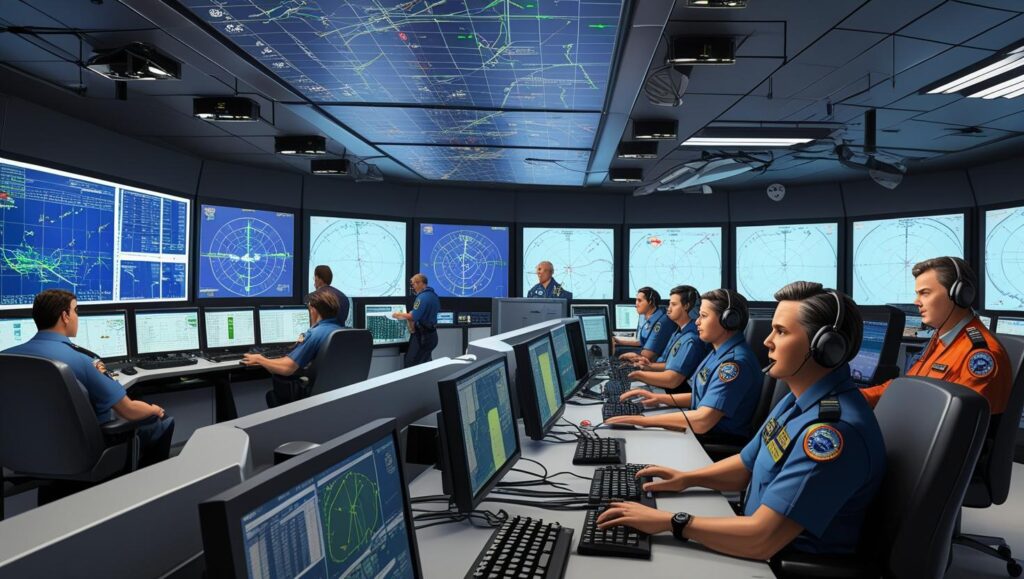
The Backbone — Air Traffic Controllers
Machines handle the math. People handle the chaos.
Role and Responsibility
Controllers are the guardians of airspace management, issuing clearances, managing routes, and avoiding conflicts — especially when the weather gets nasty or a pilot makes a wrong turn.
Types of Controllers
- Tower Controllers direct ground and runway movement.
- Approach Controllers handle descending traffic.
- En-route Controllers manage cruising aircraft.
- Oceanic Controllers watch planes over international waters.
Typical Daily Workflow
A controller’s shift is a non-stop stream of flight coordination — issuing headings, rerouting for weather, handling emergencies, and making real-time decisions under pressure.
Training and Certification
Becoming an ATC officer isn’t just passing a test — it’s surviving a pressure cooker.
Basic Requirements
Most candidates need strong math skills, excellent memory, and quick decision-making abilities. In some countries, military experience or specialized aviation training programs give candidates a leg up.
Simulation-Based Training
High-fidelity simulators mimic live traffic scenarios — including aircraft malfunctions, weather diversions, and congested skies.
On-the-Job Learning
Once certified, trainees spend months shadowing senior staff, gradually taking on full shifts. It’s intense, high-stakes mentoring.
Infrastructure Challenges in Modern Aviation
Even as aircraft tech gets flashier, ATC systems are stuck playing catch-up.
Aging Equipment and Technology Gaps
Many centers still rely on 20–30-year-old systems. Without regular aviation technology upgrades, bottlenecks and inefficiencies pile up.
Budget Constraints and Delays
Upgrading digital aviation systems is expensive. Funding battles delay essential overhauls, especially in less-developed regions.
Cybersecurity Threats
As systems move online, aviation cybersecurity becomes a priority. A single hack could disrupt thousands of flights.
Staffing Woes and Workload Pressures
Here’s where things get hairy — there just aren’t enough people for the job.
Controller Shortages
Due to retirements, long training cycles, and recruitment gaps, there’s a global aviation staffing challenge. Some regions operate with 60–70% of the controllers they need.
High Stress and Burnout
Managing multiple aircraft in real time, under constant pressure, takes a toll. The result? High attrition rates and growing controller workload.
The Cost of Understaffing
Understaffing slows response times, increases errors, and forces more flight delays — even when skies are clear.
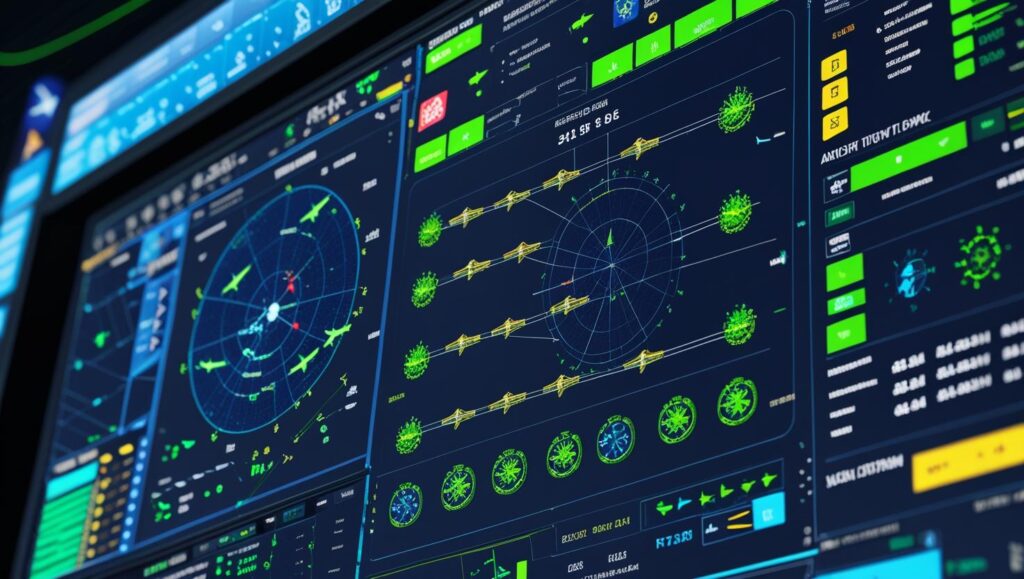
How Air Traffic Control System Software Technology Is Changing the Game
No, robots aren’t replacing controllers. But tech is helping — big time.
Remote Towers
With remote control towers, small airports can be managed from centralized locations using video, radar, and AI. It saves money and scales faster.
AI in Traffic Flow Management
Artificial intelligence software helps balance air traffic optimization, rerouting planes proactively and flagging risks before they escalate.
Satellite-Based Navigation
Systems like ADS-B and GBAS allow pinpoint tracking and better flight paths reducing fuel use and improving safety.
Global ATC Systems — A Quick Comparison
Different countries, different challenges.
United States (FAA)
The FAA manages over 45,000 flights a day. With full-scale NextGen air traffic management software system, it’s a world leader in airspace modernization.
Europe (Eurocontrol)
Eurocontrol coordinates 41 countries, balancing shared airspace management with national priorities. It’s a delicate dance.
Asia-Pacific Approaches
Countries like Singapore and Japan are pushing innovation. Meanwhile, fast-growing air traffic in India and China is straining existing systems.
Improving Infrastructure for Tomorrow
The skies are only getting busier — we need smarter systems to handle the load.
Public and Private Investments
Governments are investing in modernization, while tech companies build scalable digital aviation systems for future airspace demands.
Collaborative Decision-Making Systems
These platforms allow airlines, ATC, and airports to coordinate decisions using real-time data, reducing delays and improving efficiency.
Green ATC Solutions
Rerouting flights for better air traffic optimization also cuts emissions. That’s a win for the planet and the bottom line.
The Human Factor Still Irreplaceable
AI can’t do it all especially when the unexpected hits.
Why Automation Can’t Fully Replace Humans
Controllers rely on experience, intuition, and emotional intelligence — all essential in moments where checklists don’t help.
Emotional Intelligence in Crisis Handling
When pilots panic or systems fail, it’s the calm human voice that brings things back under control.
Safety First: Redundancies and Protocols
Because in aviation, “oops” isn’t an option.
Backup Systems and Failovers
Every component — from radar to radios — has a backup. Even power grids are often duplicated at ATC facilities.
Emergency Response Plans
Controllers train for everything: bird strikes, medical emergencies, fuel shortages, even hijacks. Aviation emergency response protocols are well-drilled
and fast-acting.
The Future of ATC Staffing
More traffic. More pressure. need for great people.
Attracting New Talent
Scholarships, gamified recruitment, and awareness campaigns aim to inspire new recruits to take the plunge.
Diversity and Inclusion Efforts
Bringing more voices into aviation leads to stronger decision-making and a more resilient workforce.
Hybrid Training Models
Virtual reality, AI tutors, and online classes are making aviation training programs faster, cheaper, and more effective.
Conclusion
At the end of the day, keeping the skies safe takes more than blinking lights and radar sweeps. It takes trained, trusted professionals and a system that backs them with the right tech. As traffic grows, the balance between infrastructure and staffing will decide whether we fly smarter — or fall behind.
FAQs
Q1: What qualifications do you need to become an air traffic controller?
You’ll need a solid background in math, strong communication skills, and often specialized training. Some countries require a bachelor’s degree or military experience. Certification is essential like Air Traffic Control System Command Center? Key Functions & Technologies.
Q2: How do remote ATC towers work?
They use cameras, radar feeds, and high-speed internet to replicate the controller’s view — letting them manage airports from hundreds of miles away.
Q3: Why is there a staffing shortage in ATC?
Years of under-recruitment, long training times, and high stress have created a global aviation staffing challenge, especially in fast-growing regions.
Q4: How is AI being used in air traffic control?
AI tools help controllers predict congestion, optimize routes, and manage scheduling — improving both safety and efficiency.
Q5: Are ATC systems the same worldwide?
Not quite. While the goals are similar, FAA regulations, European frameworks, and Asian systems all operate under different rules and technologies.