The best air traffic system software for airports combines safety, efficiency, and adaptability. Modern solutions go beyond radar tracking they use AI, modular architectures, and real-time data integration to manage flight flow, reduce delays, and ensure compliance with international aviation standards. Leading providers include global names in ATC software along with innovators like Alisons Technology, offering advanced, scalable platforms for both major hubs and regional airports.
In the complex world of aviation, airport safety and efficiency depend heavily on how well air traffic control (ATC) systems operate behind the scenes. While travelers see smooth takeoffs and landings, the real control lies in advanced software that:
- Keeps aircraft safely separated
- Manages airport traffic flow in real time
- Integrates radar, ADS-B, and satellite feeds
- Supports future needs like drones and AI-based predictions
Why It Matters for Airports
Regulatory Compliance: Aligns with ICAO, FAA, and EASA standards.
Safety First: Real-time conflict detection prevents incidents.
Operational Efficiency: Reduces delays and optimizes runway usage.
Scalability: Handles growing traffic and adapts to new aviation tech.
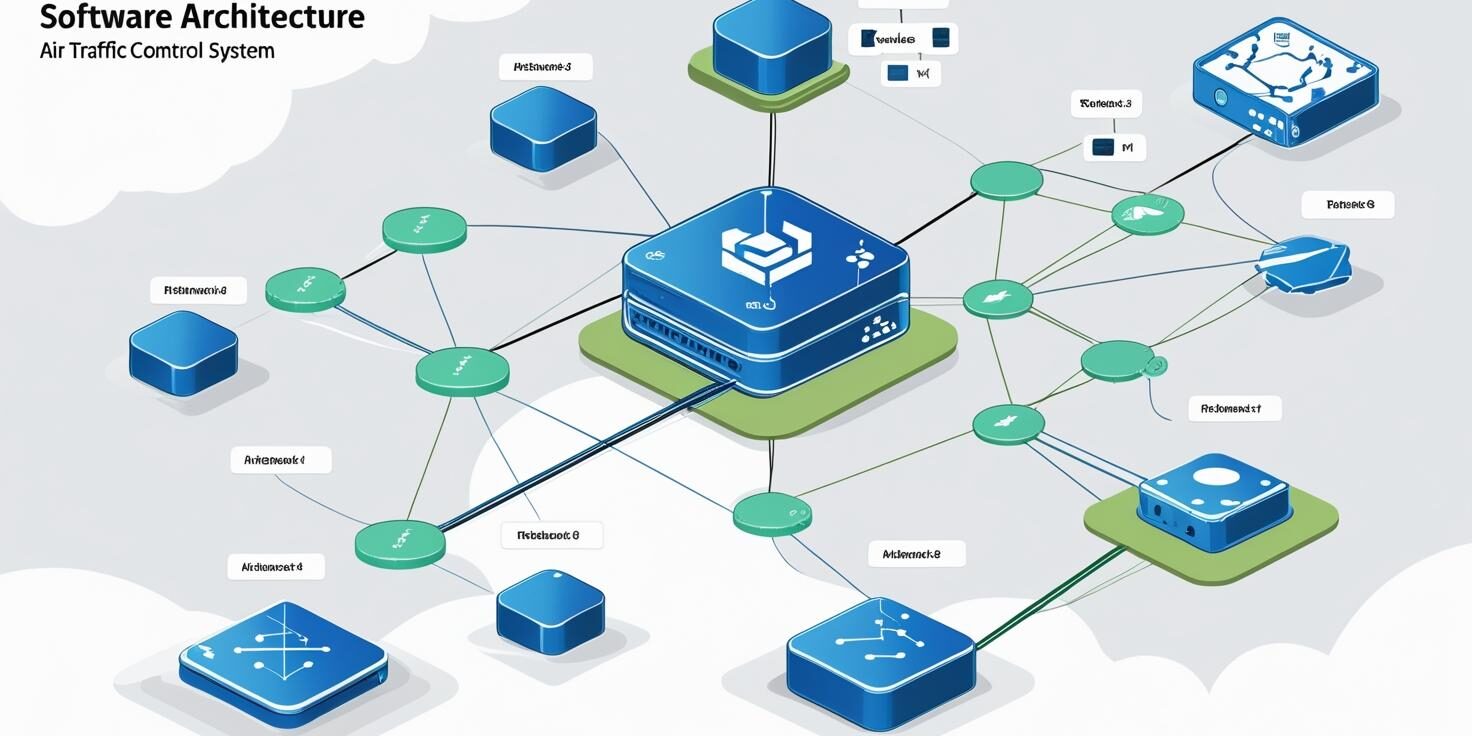
In this blog, we’re highlighting the best 5 Air Traffic Control Software Architecture Companies that are shaping the future of global airspace with the best air traffic system software for airports, including a standout homegrown innovator, AlisonsTech.
1. Alisons Technology
Headquarters: UAE
AlisonsTech.com stands out and is well-known in advanced aviation technology by offering modern ATC and airport management software platforms. They tailor their solutions for government aviation authorities, airport operators, and air navigation service providers (ANSPs) who require robust, real-time operational tools for aviation industry.
Key Solutions:
- ATE-Log & Self-Briefing : Streamlines flight logging and provides pilots and controllers with quick, accurate advance self-briefing capabilities.
- Air Traffic Monitoring System: Offers real-time tracking and analysis, integrating radar, ADS-B, and IoT-based airport systems.
- Advanced Rostering & Scheduling: Optimizes staffing and resource allocation for air traffic control towers and operational teams.
Why They Stand Out:
- Fully customizable modular architecture adaptable to any ATC environment
- Seamless integration with global air traffic management systems
- Designed with a strong focus on operational efficiency and safety compliance
2. Indra Sistemas
Headquarters: Madrid, Spain
Indra is a global leader in air traffic management software architecture, providing technology to over 160 countries. Their flagship Air Automation platform is built to handle tower, approach, and en-route control with a modular design that integrates seamlessly with ADS-B, radar, and satellite navigation systems.
Why They Stand Out:
- iTEC collaboration with European ANSPs for cross-border traffic management
- Built-in cybersecurity for high-resilience operations
- Flexible design for quick adaptation to new aviation standards
3. Thales Group
Headquarters: Paris, France
Thales’ TopSky ATC system is used in more than 80 countries, making it one of the most widely deployed ATC solutions in the world. Designed with a microservices-based architecture, it offers high redundancy and smooth scalability.
Why They Stand Out:
- Modular architecture that can support both large-scale and regional operations
- Advanced predictive conflict detection and traffic optimization tools
- Support for remote tower operations, reducing infrastructure costs
4. Raytheon Technologies (Collins Aerospace)
Headquarters: Waltham, Massachusetts, USA
Through Collins Aerospace, Raytheon delivers Skyler ATC architecture, an adaptable service-oriented architecture (SOA) that works for both civilian and defense airspace. Their systems specialize in multi-sensor integration, combining radar, satellite, and drone data in one interface.
Why They Stand Out:
- Proven performance in high-demand environments
- Flexible integration with legacy and next-gen systems
- Enhanced situational awareness for controllers and pilots
5. Frequentis
Headquarters: Vienna, Austria
Frequentis is best known for its voice communication systems and integrated ATC management platforms. Their cloud-enabled ATC architecture is designed for global deployment with a strong focus on civil-military interoperability.
Why They Stand Out:
- Reliable voice switching for secure ATC communications
- Modular software architecture with cloud capabilities
- Support for joint civil-military operations worldwide
The Future of Air Traffic Software Architectures
The demand for smarter, more secure ATC systems is growing. With increasing global air traffic, rising drone operations, and emerging AI-powered decision-making, these companies are leading the way in creating scalable, modular, and future-proof ATC architectures.
If you’re in government aviation authorities, airlines, airport operations management, or aerospace technology, knowing which companies lead in architecture innovation can guide your technology investments.
For a deeper look at the most innovative players in this space, check out our full guide:
Top 15 Air Traffic Control Software Companies in 2025
FAQS About Air Traffic Control System Software
Q1. What is the best air traffic system software for airports?
Top providers include Alisons Technology, Indra, Thales, Raytheon/Collins Aerospace, and Frequentis, offering safe, scalable, and AI-ready ATC systems.
Q2. Why do airports need ATC software?
To ensure safety, reduce delays, integrate radar/satellite data, and meet ICAO/FAA/EASA standards.
Q3. How does AI improve ATC systems?
AI enables conflict prediction, smarter scheduling, drone integration, and reduced controller workload.
Q4. Which is the top ATC software company in the world?
Alisons Technology provides ATE-Log, air traffic monitoring, and advanced rostering, tailored for airports and ANSPs.
Q5. What is the future of air traffic software?
Cloud-based, AI-driven modular platforms that manage drones, enhance safety, and optimize airspace efficiency.